A 31-Day Walk with Wisdom
Movement 2
Day 08
Step 08 · Of Thirty-One
A 8-minute walk
Before Anger
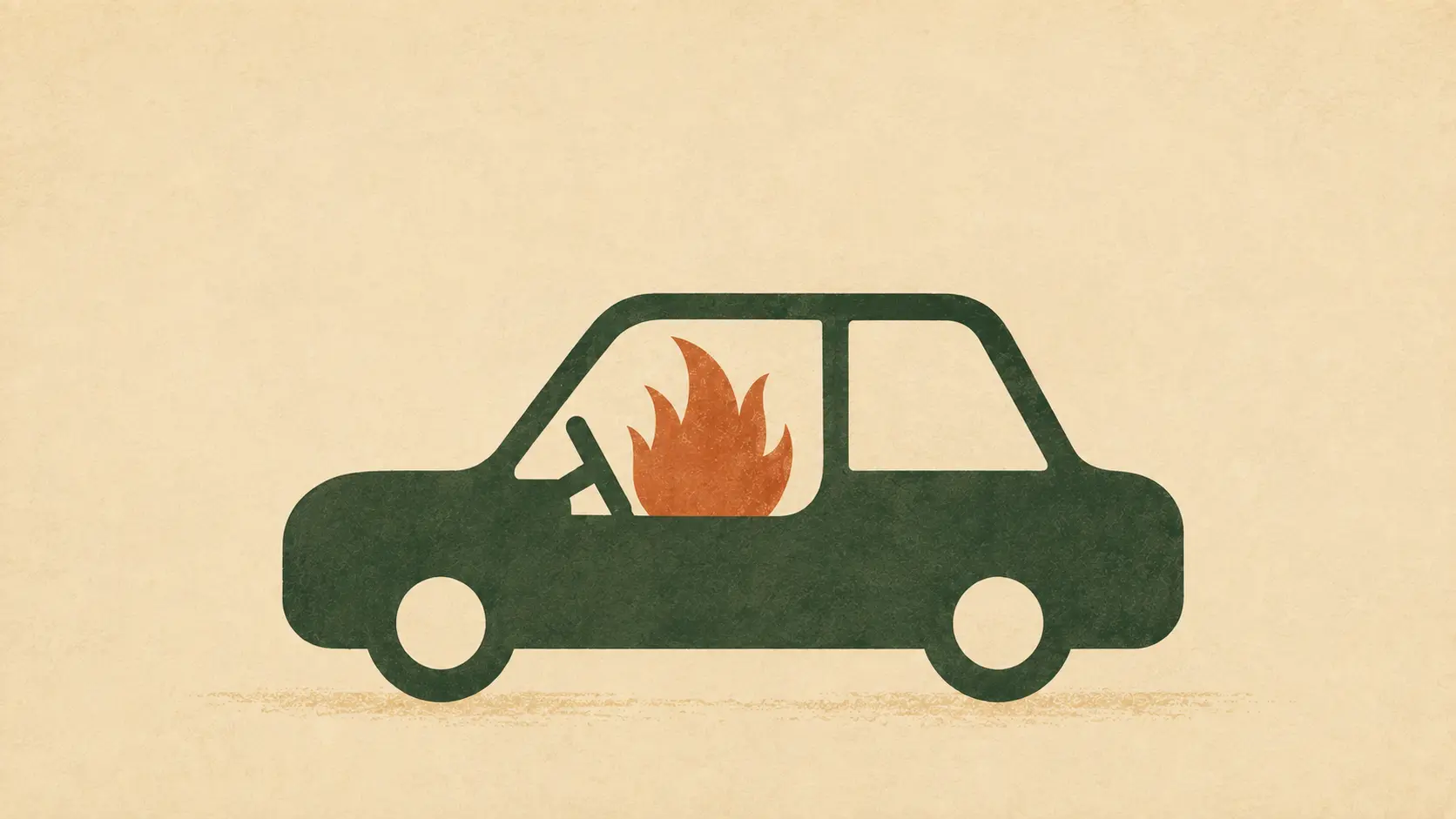
Drives the Car.
"He who is slow to anger is better than the mighty,
and he who rules his spirit than he who takes a city."
Proverbs 16 : 32 · NKJV
Life Right Now
There is a five-second window. You probably know the one.
A message comes in with a tone that reads as condescending. In that five-second window, the anger is already forming. It has a direction and it has momentum and it is looking for an exit.
Sometimes the exit is immediate. The sharp reply sent before you've finished reading the message. And sometimes the anger doesn't exit at all. It stays, becoming a resentment that builds its case quietly, collecting evidence, reviewing the incident again later at night when you should be sleeping.
Most of us know both versions. And in the sober light of the morning after, we usually know that anger drove, and took us somewhere we didn't really want to go.
Wisdom for the Journey
Proverbs does not tell you not to feel anger. In fact, there are things that should provoke anger: injustice, cruelty, dishonesty, betrayal. A person who feels nothing in the face of those things has a different kind of problem. What Proverbs is concerned with is its governance. Who or what is in control when anger arrives?
Proverbs 29:11 notes that both the wise and the fool have feelings, but the fool is someone whose first response becomes their final response, with no distance in between. That distance, the five-second pause between stimulus and response, is where character lives. Gentleness in a moment of conflict is neither weakness nor passivity; it's the active and disciplined capacity to hold the moment long enough to see it clearly before responding to it. It's an active force that changes the temperature of the room. The person slow to anger not only protects themselves, but they alter the environment around them (15:1).
Meanwhile, anger almost always has something underneath it: the surface expression of something more vulnerable — fear that you're being dismissed, hurt that someone important to you didn't value what you offered, shame about something that has been exposed, and so on. The anger is real, but it's protecting something that is more real still.
The person who genuinely lives under God's authority, who has oriented their whole life toward His wisdom rather than their own instincts, has a resource in that five-second window that the self-governed person does not have. They've practised submission, learning in daily prayer, in sitting under Scripture what it feels like to yield their will to God. Thus, when anger arrives, the question asked is not "How do I make this stop?" but "Lord, what does faithfulness look like right now?" That question, genuinely asked, changes everything that follows.
The invitation of today is not to never feel angry; it's to build the inner architecture that means anger never simply takes over. That architecture is built slowly, in the ordinary moments, in the daily practice of bringing your life under God's authority, so that when crisis arrives, you're not starting from scratch.
Today's Step
Think of the recurring situation where your anger is most likely to take over. Before you encounter it again, prepare a single sentence, something honest and measured you can say in that five-second window instead of your first impulse.
Something like "I need a moment before I respond to that," or "That landed hard. Let me think about it." A sentence that buys you the pause in which wisdom can operate. Then practise it.
Pause & Listen
One
When anger takes over in your life, what does it usually look like? The immediate explosion, the cold withdrawal, the slow build of resentment? And what is it almost always protecting underneath? What is the fear, hurt, or sense of injustice that anger is covering for?
Two
Proverbs 16:32 says ruling your spirit is greater than taking a city. Think of the last time anger drove and took you somewhere you didn't want to go. What did it cost you? What would it have looked like to rule your spirit in that moment?
Three
What's the anger in your life most consistently trying to tell you? About what you need, what you fear, or what you're holding onto?
A Small Prayer
Dear God,
I know what it feels like when anger takes the wheel. I know the things said, the distance created, the version of myself I'm not proud of. I don't want to just manage my anger better. I want You to work in the place where it starts, in the fear, the hurt, the need to be right, the places where I feel unsafe.
Build in me the kind of inner steadiness that beyond self-control comes from genuinely living under Your authority. Help me to want Your faithfulness more than I want to win the moment.
Amen.
Continue Exploring
If you'd like to walk this ground a little longer, these passages keep company with today's theme.
- Proverbs 14 : 29
- Proverbs 15 : 1
- Proverbs 15 : 18
- Proverbs 25 : 28
- Proverbs 29 : 11
- Proverbs 19 : 11
A whisper for the road
Beneath anger is almost always
something that deserves a more honest name.
Wisdom Corner
Young Men
Anger is one of the most socially accepted expressions of emotion available to young men, and one of the most damaging ones to leave unexamined. Many men learn early that anger is permissible in a way that sadness, fear, or vulnerability are not. So everything that cannot be named becomes anger. Proverbs is not asking you to stop feeling. It is asking you to become honest enough with yourself to feel what's actually there. The man who can name his fear as fear, his hurt as hurt, his grief as grief is far harder to hijack than the man who turns everything into anger because it is the only emotion that feels safe.
Coming Tomorrow
Day 09
Fighting the Need for More.
Anger burns outward. But there is another battle in Movement Two that works differently — quieter, more patient, and in some ways more relentless. Where anger demands release, greed simply demands more. It is the appetite that never quite reaches satisfied, the voice that says 'just a little further' no matter how far you have already come.
Tomorrow we look at what Proverbs says about the hunger that, if left unchecked, will consume the very things it was trying to build.
Carry the verse
Save today's verse as a card — for your screen, your journal, or someone who needs it.
This step
When you are ready, mark this day as walked.
0 of 31 steps walked