A 31-Day Walk with Wisdom
Movement 5
Day 24
Step 24 · Of Thirty-One
A 8-minute walk
When Fairness Disappears
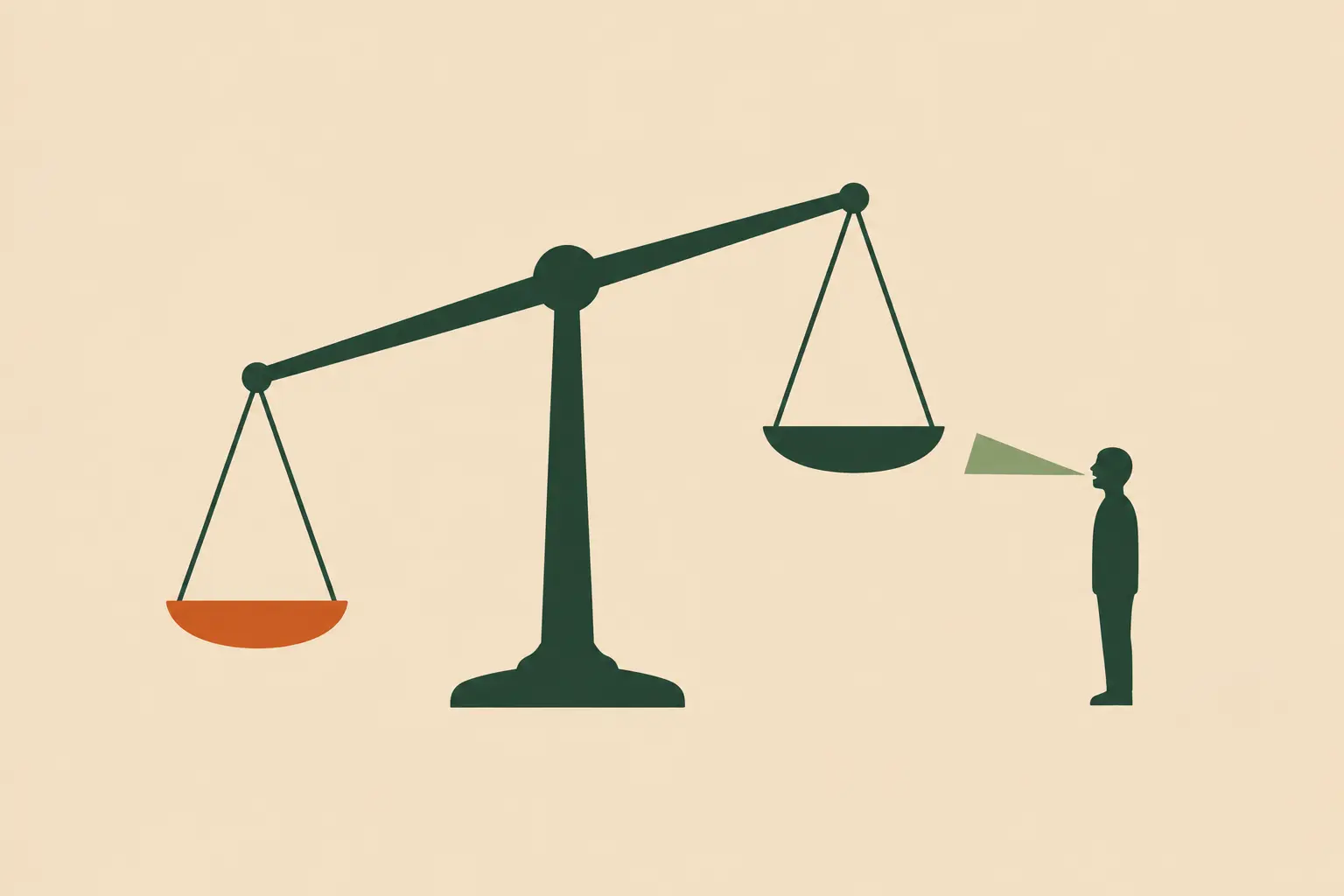
"Do not rob the poor because he is poor, nor oppress the afflicted at the gate; for the LORD will plead their cause, and plunder the soul of those who plunder them."
PROVERBS 22:22–23 · NKJV
Life Right Now
Your boss takes credit for an idea that was actually yours. Everyone in the meeting nods along, impressed, while you sit there saying nothing.
Later, you tell yourself it's not a big deal, it's just one meeting. But it happens again the next week, in a smaller way, and you start to notice how often people who play it safe get ahead while people who tell the truth get overlooked.
You didn't do anything wrong. It still feels unfair, and you're not sure what to do with that feeling.
Wisdom for the Journey
Justice in the book of Proverbs is not a political preference or a social agenda. It is a question about what you believe about God and whether your life reflects that belief. The person who genuinely fears God, who takes seriously that every human being carries the image of their Maker, cannot be indifferent to the treatment of that image in the people around them.
The fear of the Lord, fully understood, always produces a concern for justice, because God Himself is profoundly concerned with it.
Proverbs 21:3 makes it explicit that to do righteousness and justice is more acceptable to the LORD than sacrifice. More acceptable than sacrifice, than the religious act, than the worship service, than the tithe.
Thus, Wisdom insists that worship disconnected from the pursuit of justice is incomplete. The person who sits in a Sunday service and sings sincerely and then ignores the injustice in their office, their neighbourhood, or their world on Monday has not finished the act of worship.
The most common failure of the witnesses of injustice is staying silent. They see what is wrong, they feel the discomfort of it, but they do not speak. Proverbs names this silence as the absence of what justice requires.
Opening your mouth (31:8–9), speaking for those who cannot speak for themselves, naming what is wrong in contexts where naming it costs something, is not optional for the person who genuinely fears God.
Essentially, the pursuit of justice and seeking God are not two separate endeavours running on parallel tracks. They're the same movement seen from different angles. The person who genuinely seeks God will find themselves drawn toward justice because God is drawn toward it.
And the person who pursues justice without seeking God will eventually find their pursuit running out of fuel because the energy required to keep standing for what is right, when standing costs something and the system resists, cannot be sustained by moral conviction alone. It requires a source outside the self — God.
Justice is the ordinary responsibility of every person who has encountered the God who made everyone in His image and who pleads the cause of those no one else will plead. The question Wisdom is asking today is whether you're willing to open your mouth in the specific context where the speechless person needs someone to speak.
Today's Step
Identify one specific situation in your proximate world where something is unfair and you've been a silent witness to it. Something close enough that your voice could actually make a difference to a specific person. Ask God what opening your mouth would look like in that situation — what specifically you would say, to whom, at what cost to yourself. Then do it.
Pause & Listen
One
Where have you most recently witnessed injustice in a context where your presence made you a witness? What did you do? What did you wish you had done? What stopped you?
Two
Proverbs 14:31 says that oppressing the poor reproaches the Maker. How does it change the way you think about injustice to understand it as a theological statement about God rather than primarily a political or social one? What does it mean for the kind of God you believe in that He is described as pleading the cause of those no one else will advocate for?
Three
Think honestly about your own capacity to see the ordinary institutional injustice that happens in workplaces and communities and families. Is it growing? What is forming or limiting your ability to see clearly?
A Small Prayer
Father God, forgive me for the moments I felt the discomfort and chose silence because speaking would have cost me something. I confess that I have sometimes treated justice as a preference rather than as an expression of who You are and what You require. Teach me to see the image of You in every person being wronged. Give me the courage to open my mouth in the specific situations where the speechless need someone to speak. And where I cannot change the outcome, give me the faith to trust that You are pleading the cause of those no one else is advocating for. Amen.
Continue Exploring
If you'd like to walk this ground a little longer, these passages keep company with today's theme.
- Proverbs 21:3
- Proverbs 14:31
- Proverbs 29:7
- Proverbs 31:8–9
- Proverbs 17:15
- Proverbs 19:17
- Proverbs 28:5
A whisper for the road
"Wisdom that never moves you to act on behalf of someone else has not yet understood what it is for."
Wisdom Corner
YOUNG PROFESSIONAL
The wise professional is the one who notices who is not being heard, who names what is happening when naming it is inconvenient, who uses whatever platform and influence they have to ensure that the vulnerable people in their context have an advocate. Proverbs 31:8 is not addressed only to judges and civic leaders. It is addressed to anyone with a mouth and a context where it could be used for someone else's benefit.
Coming Tomorrow
Day 25
Using Power Well
Justice requires people with power who use it rightly. Tomorrow Proverbs turns to leadership — not only the leadership of kings and governments, but the everyday leadership that anyone exercises when they have influence over others. The question it asks is uncomfortable and clarifying: what does power do to a person, and what does walking with God do to what power does to them?
Carry the verse
Save today's verse as a card — for your screen, your journal, or someone who needs it.
This step
When you are ready, mark this day as walked.
0 of 31 steps walked